
By Zajac Trial Group · Updated November 1, 2026 · Practical planning guide
Before trial: prepare the files.
The operator needs a dependable relationship between the exhibit list, file names and presentation database. That includes checking page order, locating cited passages and identifying video excerpts from the supplied transcript references. An imported file is not automatically a reviewed file.
The trial team also needs a way to separate approved presentation material from drafts or clips still awaiting a decision. A rehearsal can reveal confusing exhibit references before counsel uses them during an examination. See organizing trial exhibits for a concrete handoff structure.
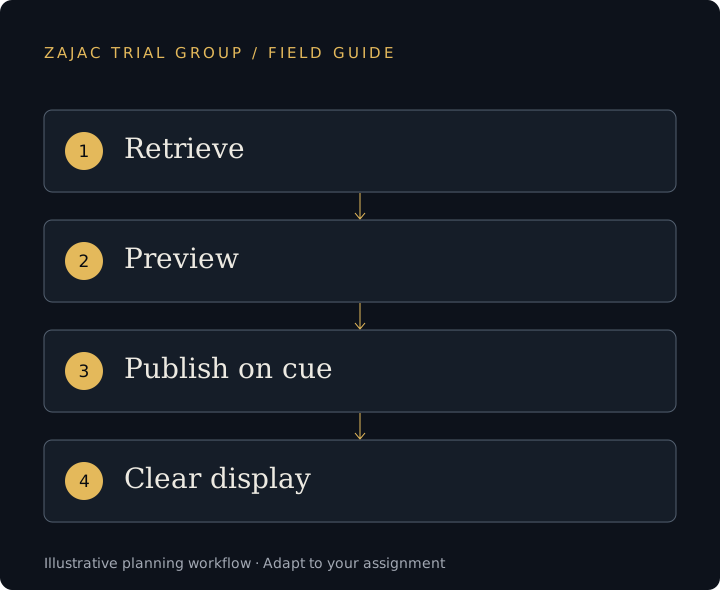
In the hot seat: retrieve, preview, publish, clear.
Scroll sideways to view all columns
| Counsel's request | Operator's task | Check |
|---|---|---|
| “Exhibit 14, page 7” | Retrieve the referenced page in preview. | Correct exhibit and page. |
| “Enlarge paragraph 7.2” | Prepare the callout. | Readable text with useful context. |
| “Publish” | Route the intended view to the courtroom display. | Only material cleared for this use. |
| “Clear the screen” | Remove the published view. | The audience no longer sees it. |
These are example cues, not court rules. Agree on vocabulary with the actual operator. Our interactive exhibit demonstration uses fictional material to show the difference between preparing a view and publishing it.
For preparation and live courtroom operation, see our hot-seat operator services and check availability for your trial dates.
Prepare deposition clips for playback.
A short deposition excerpt may rely on several source files, a synchronized transcript, counsel's designation list and later edits. The operator must be able to identify which cut is current and which version counsel has approved for use. Playing a file successfully on a laptop does not establish that its sound will reach the courtroom audience.
Check the beginning and end of the final cut, volume and any captions intended for display. During testimony, counsel may ask to pause, resume or move to another cleared excerpt. The designation-to-playback workflow covers the handoff between legal decisions and technical editing.
Agree who handles what.
The hot-seat operator handles presentation; counsel remains responsible for legal decisions and directions about the evidence. Discuss who records exhibit-status changes and how that working record is reconciled with the court's record. Do not assume a technician's working log is an official exhibit record.
A backup plan should specify the equipment, files and people available. Ask who can take over, how that person receives current files and how long a handoff would take. Avoid relying on the word “backup” without describing the arrangement.
For an out-of-town trial, allow for arrival, room access and a system check as well as court attendance. Nationwide coverage is scoped around the actual proceeding, and availability is confirmed before dates are reserved.
Before we begin
Questions from trial teams.
Does the operator decide which exhibits the jury sees?
No. Counsel directs presentation, subject to the court’s instructions and rulings. The operator controls the technical display.
Can a hot-seat operator create graphics during trial?
That depends on the assignment and available time. Agree on graphics work, revision limits and who approves the finished material before trial.
Can we see how exhibit callouts work?
Yes. The homepage includes an interactive demonstration using a fictional document and simulated deposition excerpt. It is not a recording of an actual proceeding.